- Home
- Meet Dr. Floyd
- Our Reviews
- Treatments
- Infant Dental Exam
- Custom Mouth Guards
- Custom Night Guards
- Dental Emergency
- Dental Sealants
- Fluoride Treatment
- Gentle Teeth Cleanings
- Digital X-Rays
- Limited Orthodontics
- Silver Diamine Fluoride
- Space Maintainers
- Special Needs Dentistry
- Thumb/Finger Habit Appliance
- Tooth Colored (White) Crowns
- Tooth Colored (White) Fillings
- Tooth Extractions
- Sedation Dentistry
- Frenectomy Laser Treatment
- Parents info
- Referrals
- Contact Us
How to Improve Oral Hygiene for Kids: Tips, Habits, and Best Practices
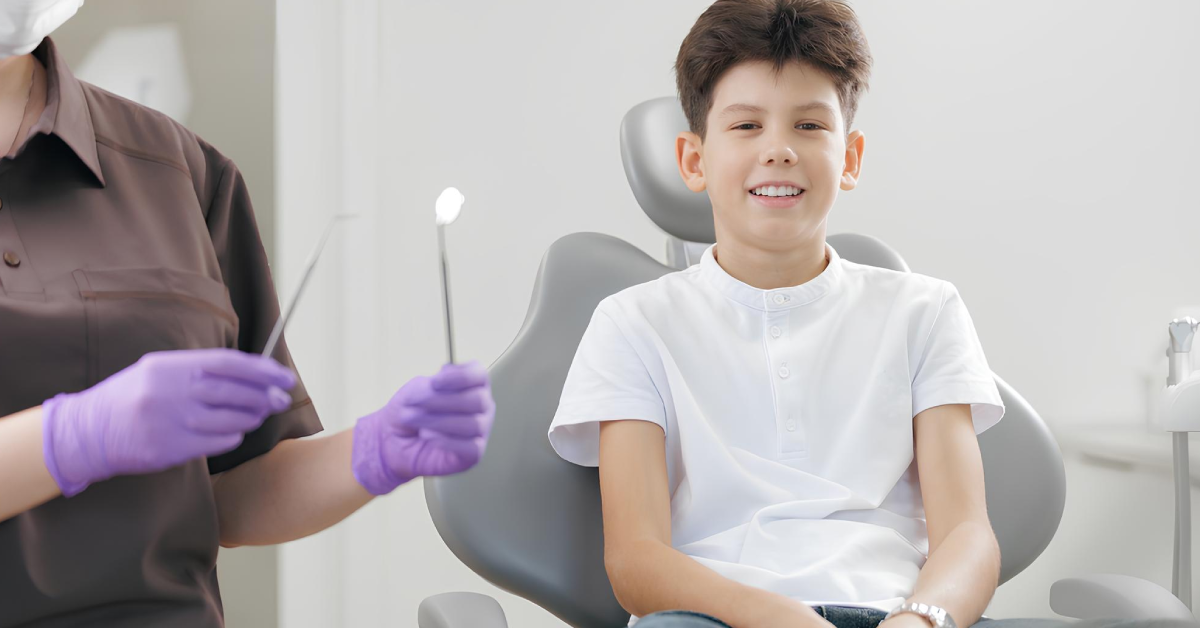
To improve oral hygiene for kids, brush twice daily for two whole minutes with a fluoride toothpaste sized to your child’s age, floss once a day as soon as two teeth touch, limit sipping and snacking between meals, and schedule a professional dental visit every six months. Supervise or assist with brushing until your child can write in cursive or tie their own shoes, usually around age seven or eight.
Most parents already know their child should brush twice a day. The harder question is why the routine keeps falling apart by Thursday night, and why a child who brushes “pretty well” still shows up with a cavity between the back molars.
At Pumpkin Pediatric Dentistry in Fairfax, VA, we see this pattern constantly. The issue is rarely parental effort. It is usually a small set of fixable gaps: the wrong amount of toothpaste, brushing that stops at the front teeth, flossing that never started, or a bedtime cup of milk that undoes everything. This guide walks through the oral hygiene habits for kids that actually move the needle, organized by age, so you can find your child’s stage and start there.
What Does Strong Kids Oral Hygiene Actually Look Like?
Effective kids’ oral hygiene rests on four pillars. Weakness in any one of them tends to show up in the mouth within a year.
- Mechanical plaque removal. Brushing and flossing physically disrupt the bacterial film that forms on teeth every few hours. No mouthwash, no rinse, and no diet change replaces this step.
- Fluoride exposure. Fluoride strengthens enamel and can help reverse very early decay before it becomes a cavity. Toothpaste is the daily source. Professional fluoride treatment delivers a higher concentration two to four times a year, depending on your child’s risk.
- Dietary frequency control. How often your child eats matters more than how much sugar is in any single item. Every exposure starts an acid cycle that takes roughly 20 to 30 minutes to neutralize. Constant grazing means the mouth never recovers.
- Professional monitoring. A pediatric dentist catches decay between teeth, tracks eruption patterns, and applies preventive materials that home care cannot replicate.
When parents ask how to improve oral hygiene for kids, they usually focus entirely on pillar one. The other three are where most of the unrealized gains sit.
How to Improve Oral Hygiene for Kids by Age
Children’s mouths, motor skills, and motivations change dramatically between infancy and the teen years. The routine should change with them.
Infants: Birth to 12 Months
Oral care starts before the first tooth. Wipe your baby’s gums carefully with a clean, damp washcloth or gauze pad after feedings. This clears milk residue and gets your child comfortable with a hand in the mouth, which pays off enormously later.
When the first tooth erupts, usually between four and seven months, switch to a soft infant toothbrush with a smear of fluoride toothpaste roughly the size of a grain of rice. Brush twice daily.
Two rules matter most at this stage. Never put your baby to bed with a bottle containing anything except water. And schedule the first dental visit by the first birthday or within six months of the first tooth appearing, whichever comes first. This is the standing recommendation of the American Academy of Pediatric Dentistry. Our infant dental exam is built specifically for this age group and includes a feeding and habit assessment.
If your infant struggles with latching, has a restricted tongue, or shows signs of a lip tie, that first exam is also the right moment to evaluate it. Our post on the benefits of laser frenectomy for children explains what that evaluation involves.
Toddlers: Ages 1 to 3
This is the hardest stage, and the one where oral hygiene habits for kids are truly formed. Your toddler wants autonomy. Their motor skills cannot deliver it.
The workable compromise is the “you go first, I finish” approach. Let your child brush for as long as they want. Then take the brush and do a thorough pass yourself. Frame the second pass as counting teeth or checking for “sugar bugs,” not as correcting their work.
Keep using a rice-grain smear of fluoride toothpaste until age three. Teach spitting rather than rinsing once your child can manage it, since a thin film of fluoride left on the teeth is beneficial.
Position matters more than people expect. Lay your toddler’s head in your lap facing up, or brush from behind while they stand in front of you facing a mirror. Both give you the visibility and angle you cannot get standing face to face.
Preschoolers: Ages 3 to 5
At three, increase to a pea-sized amount of fluoride toothpaste. Introduce flossing as soon as any two teeth touch, which for most children happens between ages two and four in the back molars. Those contact points are the single most common cavity site in preschoolers, and a toothbrush physically cannot reach them.
Preschoolers can begin brushing more independently, but they still miss the gum line, the inside surfaces, and the back molars almost universally. Continue supervising and finishing.
This is also the ideal window for dental sealants on primary molars if the grooves are deep, and the age when gentle teeth cleanings every six months should become routine. If your child is anxious about visits, our guide to your child’s first dental visit covers how we structure appointments to build comfort.
School-Age Children: Ages 6 to 12
The first permanent molars arrive around age six, behind the last baby teeth. Many parents never notice them because no tooth falls out first. These molars have deep grooves and are the most cavity-prone teeth in the mouth, which makes them the highest-value candidates for sealants.
By seven or eight, most children have the dexterity to brush effectively on their own. Verify this before you hand over control. A simple check: after your child brushes, run your fingernail along the gum line of the lower front teeth and precisely around the outer surfaces of the upper molars. If you feel a soft film, they are not ready.
Flossing should be daily and non-negotiable by now. Floss picks are far easier for children to manage than string, and a tool a child actually uses beats a technically superior one they abandon.
This is also the stage when spacing, crowding, and bite issues become visible. An early orthodontic evaluation around age seven can identify problems while growth can still be guided. If a baby tooth is lost too early, space maintainers hold the gap so permanent teeth erupt where they should.
Preteens and Teens
Independence peaks and supervision ends, which is exactly when decay risk often climbs again. Sports drinks, energy drinks, late-night snacking, and orthodontic appliances all raise the difficulty level.
Shift your role from enforcer to consultant. Teens respond to appearance and autonomy far more than to lectures about enamel. If your teen plays contact sports, a custom mouth guard protects against the kind of trauma that leads to lifelong restorative work. If they clench or grind at night, a custom night guard prevents enamel wear.
Brushing: The Core of Oral Hygiene Habits for Kids
How Long and How Often
Two minutes, twice a day. Morning and, critically, right before bed. Saliva flow drops during sleep, so anything left on the teeth overnight sits in an unprotected environment for eight to ten hours. The bedtime brush is the one that matters most, and it is the one most often rushed.
Two minutes feels much longer than parents estimate. Use a timer, a two-minute song, or a brushing app. An easier rule can be dividing the mouth into four quadrants and then spending 30 seconds on each; it also makes it sound fun for kids.
Technique That Actually Removes Plaque
Angle the bristles at roughly 45 degrees toward the gum line and use small circular motions rather than a horizontal scrub. Cover all three surfaces of every tooth: outer, inner, and chewing. The inner sides and surfaces of the lower front teeth and outer side of the upper back molars are the two most commonly skipped zones in children.
Replace the toothbrush religiously every three months, or sooner if the bristles splay. A frayed brush does not clean.
Manual or Electric?
Either works when used correctly. Electric brushes have two practical advantages for children: the built-in timer removes the argument about duration, and the oscillating head compensates for imperfect technique. Among the best practices for kids’ oral hygiene, choosing the brush your child will use consistently outranks choosing the theoretically superior one.
Flossing: The Step Most Families Skip
Roughly a third of every tooth surface sits between teeth where a brush cannot reach. This is why children with visibly clean teeth can still develop cavities that only show up on digital X-rays. Our post on whether digital X-rays are essential for your child’s dental health explains how these images catch decay in the earliest stage.
Start flossing as soon as two teeth make contact. Use a gentle C-shape around each tooth and slide slightly below the gum line. Some bleeding in the first week of a new flossing routine is common and typically resolves as gum inflammation settles. Bleeding that continues past two weeks warrants an exam.
Water flossers are a reasonable supplement, especially for children in braces, but they do not fully replace the mechanical wiping action of floss against the tooth surface.
Among practical oral hygiene tips for kids, this one has the highest return: attach flossing to an existing anchor habit. Floss right before pajamas, every night, in the same spot. Habits attach to other habits far more reliably than they attach to intentions.
Diet: The Factor That Quietly Undoes Good Brushing
Frequency beats quantity. A child who sips juice from a cup over three hours is at far greater risk than a child who drinks the same juice in five minutes with lunch.
Practical changes that work:
- Make water the default between meals. Fairfax County tap water is fluoridated, which adds a small protective benefit.
- Contain sweets to mealtimes rather than spreading them across the day.
- Watch the sticky and slow-dissolving items: gummy vitamins, fruit snacks, dried fruit, crackers, and hard candy. These cling to grooves long after the meal ends.
- Treat sports drinks and flavored waters as sugary drinks, because most are.
- Offer cheese, plain yogurt, nuts, and crunchy vegetables as tooth-friendlier snacks.
If your child already has early decay, dietary change alone will not reverse advanced lesions, but it dramatically slows progression. Our guide on how to prevent cavities in kids goes deeper on risk factors, and our article on the consequences of tooth decay in children explains what happens when it goes untreated.
Teaching Kids Oral Hygiene Without a Nightly Battle
Teaching kids oral hygiene is fundamentally a behavior-design problem, not an information problem. Your child already knows they should brush. The routine fails on friction, fatigue, and inconsistency.
- Make it the same time every day. Predictable routines reduce resistance because the decision has already been made.
- Give controlled choices. Let your child pick the toothbrush color, the toothpaste flavor, or whether to brush before or after pajamas. Autonomy over small details reduces resistance to the non-negotiable part.
- Brush together. Children copy behavior far more reliably than they follow instructions. If they see you flossing, flossing becomes normal rather than imposed.
- Use visual tracking. A simple two-week sticker chart works well for children under seven. Track completion, not perfection.
- Never use the dentist as a threat. “The dentist will be mad” or “you’ll need a shot” builds anxiety that can persist for decades. Frame visits as routine and positive. If dental anxiety is already established, sedation dentistry offers a path forward, and our post on managing fear of the pediatric dentist covers the options.
- Explain the why at their level. Even four-year-olds respond to “sugar bugs make holes in your teeth and holes hurt” better than to being told to brush because you said so.
Five Common Mistakes Parents Make
- Handing over independence too early. A five-year-old brushing alone is a five-year-old not brushing the back molars.
- Using too much toothpaste. More foam obscures visibility and makes children want to spit early. Rice grain under three, pea-sized after.
- Rinsing vigorously after brushing. This washes away the fluoride that was just applied. Spit, do not rinse.
- Waiting for pain before booking. Pain means the decay has reached the nerve. Cavities are silent for a long time first.
- Skipping the six-month visit when nothing hurts. Prevention only works when it happens before the problem.
Correcting these five items alone improves the oral hygiene habits for kids in most households more than any product purchase.
Where Home Care Needs Professional Backup
Even excellent home care has limits. These are the preventive services that close the gap and belong in any serious discussion of best practices for kids’ oral hygiene:
- Gentle teeth cleanings remove hardened tartar that brushing cannot touch, every six months.
- Fluoride treatment delivers a concentrated dose that strengthens enamel and can remineralize early lesions.
- Dental sealants seal the deep grooves in molars where a brush bristle physically cannot fit.
- Silver diamine fluoride can arrest active decay without drilling, which is valuable for very young or anxious children.
- Digital X-rays detect decay between teeth and monitor developing permanent teeth.
When prevention arrives late, we restore conservatively with tooth-colored fillings and, for larger breakdowns, tooth-colored crowns. Tooth extractions are always a last resort.
Special Situations Worth Planning For
Children with special healthcare needs. Sensory sensitivities, motor limitations, and medication-related dry mouth all raise risk. Our special needs dentistry approach adapts pacing, positioning, and environment to each child.
Thumb and finger sucking past age four. Prolonged habits can shift developing teeth and jaws. A thumb or finger habit appliance is a straightforward intervention when gentle encouragement has not worked.
Nighttime grinding. Common in children and often self-resolving, but worth monitoring for enamel wear. Our article on why kids grind their teeth at night covers the causes and when to intervene.
Alignment concerns. Limited orthodontics can address specific issues without full treatment, and crowded teeth are genuinely harder for children to clean, which makes alignment an oral hygiene issue as well as a cosmetic one.
Knocked-out or fractured teeth. Keep our dental emergency line saved in your phone. For a permanent tooth, the first 30 minutes matter enormously.
A Practical 30-Day Plan to Reset Your Routine
If your household routine has drifted, rebuild it in stages rather than all at once.
- Week 1: Lock in two-minute brushing twice daily, with you finishing every session. Change nothing else.
- Week 2: Add nightly flossing, attached to an existing bedtime step.
- Week 3: Shift between-meal drinks to water only. Move sweets to mealtimes.
- Week 4: Book the six-month checkup and let your child see it on the calendar as a normal, expected part of the routine.
Layering oral hygiene habits for kids one week at a time produces far better retention than a single overhaul that collapses by day five.
Best Practices for Kids Oral Hygiene: The Checklist
Print this and put it on the bathroom mirror.
- Brush for two whole minutes, twice daily, with fluoride toothpaste
- Rice-grain smear under age three, pea-sized from age three
- Spit, do not rinse
- Floss once daily
- Supervise or finish brushing until roughly age seven or eight
- Water between meals, sweets with meals
- No bottle in bed with anything but water
- Replace the toothbrush every three months
- Professional visit every six months
- Mouth guard for contact sports
These best practices for kids’ oral hygiene are simple by design. Consistency, not complexity, produces cavity-free checkups.
When to See a Pediatric Dentist in Fairfax, VA
Book a visit if you notice white or brown spots on the teeth, bleeding gums that persist beyond two weeks, tooth sensitivity to hot or cold, persistent bad breath, difficulty chewing, or a tooth that looks loose without an obvious cause. Also book if your child has never been seen and is older than 12 months. Pumpkin Pediatric Dentistry serves families throughout Fairfax County, including Chantilly, Centreville, Vienna, Oakton, Merrifield, Springfield, and Oak Hill. Our office sits at 13135 Lee Jackson Memorial Hwy, Suite 110, Fairfax, VA 22033.
Curious what the space looks like before you arrive? Take our virtual office tour, or read what local families say on our reviews page.
Start With One Change Tonight
Learning how to improve oral hygiene for kids does not require a perfect system. It requires a consistent one. Pick the bedtime brush, protect it for two weeks, then add flossing. Small, repeated actions compound into a cavity-free childhood.
When you are ready for professional support, Dr. Jazmin Floyd and the Pumpkin Pediatric Dentistry team are here. We offer flexible financing and insurance options, accept Medicaid for kids, and offer the Pumpkin Smiles Membership Plan for families without dental coverage.
Frequently Asked Questions
Most children develop the fine motor control for effective independent brushing around age seven or eight. A useful benchmark is whether they can tie their own shoelaces or write in cursive. Until then, let them start, and you finish. Teaching kids oral hygiene is a gradual handoff, not a single moment.
A small smear of paste, the size of a rice grain from the first tooth until age three, then a pea-sized amount from age three onward. This follows current American Academy of Pediatric Dentistry guidance. Using less than recommended reduces protection, and using more increases swallowing.
Change position rather than pressure. Brush from behind with your child’s head tilted back, or lay them across your lap. Add a two-minute song, let them choose the toothpaste flavor, and brush your own teeth alongside them. Among oral hygiene tips for kids, modeling the behavior outperforms explaining it.
Yes. Baby teeth acquire the space for permanent teeth and guide their position, support speech development and chewing, and can develop infections that affect the permanent tooth forming underneath. Losing one early often requires a space maintainer to prevent crowding.
Every six months for most children. Children with a history of cavities, orthodontic appliances, or specific medical conditions may benefit from a three- or four-month interval. Your pediatric dentist will set the schedule based on individual risk.
Yes, when used in age-appropriate amounts. Fluoride is endorsed for cavity prevention by renowned pediatric associations. The main precaution is quantity control in children under six, which is why the rice-grain and pea-sized measurements exist.
Protect the bedtime routine. Brushing and flossing thoroughly before sleep, with nothing but water afterward, addresses the highest-risk window of the day. If you only fix one thing about kids’ oral hygiene in your home, fix that one
Often yes. Sealants protect the deep grooves in molars that bristles cannot physically enter, regardless of technique. They are one of the most cost-effective preventive measures available and are typically applied shortly after the permanent molars erupt.
Book an Appointment
Contact Us
Ph. 703-436-1010
Fax. 703-436-1022
Email: Info@pumpkinpediatricdentistry.com
Address
13135 Lee Jackson highway. Suite 110
Fairfax VA 22033
Office Time
Monday - Saturday: 8:30AM–5PM