- Home
- Meet Dr. Floyd
- Our Reviews
- Treatments
- Infant Dental Exam
- Custom Mouth Guards
- Custom Night Guards
- Dental Emergency
- Dental Sealants
- Fluoride Treatment
- Gentle Teeth Cleanings
- Digital X-Rays
- Limited Orthodontics
- Silver Diamine Fluoride
- Space Maintainers
- Special Needs Dentistry
- Thumb/Finger Habit Appliance
- Tooth Colored (White) Crowns
- Tooth Colored (White) Fillings
- Tooth Extractions
- Sedation Dentistry
- Frenectomy Laser Treatment
- Parents info
- Referrals
- Contact Us
Does Your Child Need Pediatric Crowns? What Fairfax, VA Parents Should Know
Dental crowns are well known in adult dentistry. They are often used to protect permanent teeth after procedures, cracks, or damage. But dental crowns aren’t just for adults. They can also be important for protecting children’s teeth as they grow.
Many parents hear the word “crown” and wonder if it is really necessary for their child, especially if the affected tooth is a baby tooth. However, pediatric crowns can play an important role in protecting children’s teeth after decay, damage, or dental treatment. This guide will help parents answer common questions including what are pediatric crowns, when they may be recommended, and what to do if a child needs a pediatric crown. For families in Fairfax, VA, this guide can also make it easier to choose the right pediatric dentist for dental crowns and other restorative dental care.
What Are Pediatric Crowns?
Pediatric crowns are protective caps placed over children’s teeth to restore their shape, strength, and function. Dentists may use them to repair teeth with large cavities, protect teeth after restorative dental treatment, or restore teeth after trauma. They are often recommended when a tooth is too damaged for a simple filling but still needs to be preserved. Pediatric crowns are commonly used for baby teeth in children ages 2 to 10, but they may be placed earlier if a tooth has erupted and needs protection.
Parents may also hear them called pediatric dental caps or caps on children’s teeth. Their goal is to protect the tooth, reduce the risk of further damage, and help your child chew and smile comfortably.
Why Not Just Pull the Baby Tooth?
Some parents wonder why a baby tooth needs a crown if it will eventually fall out. In some cases, removing the tooth may be necessary. However, if the tooth can be saved, keeping it in place helps support your child’s oral development. Baby teeth help hold space for adult teeth. If a baby tooth is lost too early, nearby teeth may shift into the empty space, which can affect how permanent teeth come in later. A crown protects the tooth so it can continue doing its job until it is ready to fall out naturally.
When Are Pediatric Crowns Needed?
A pediatric dentist may recommend a crown when a tooth needs more support than a filling can provide. Pediatric crowns are often recommended for children who have:
- A large cavity that has weakened the tooth
- A broken, cracked, or chipped tooth
- A baby tooth that needs protection after a pulpotomy or baby root canal
- A tooth with a large filling that may not hold up well on its own
- Enamel concerns that make the tooth more likely to wear down or break
- A tooth that needs added strength until it is ready to fall out naturally
In many cases, a crown can help save a child’s tooth and prevent more serious dental concerns from developing.
Types of Pediatric Dental Crowns
There are different types of pediatric dental caps, and the right option depends on the tooth being treated, the location of the tooth, and your child’s needs.
Stainless Steel Dental Caps
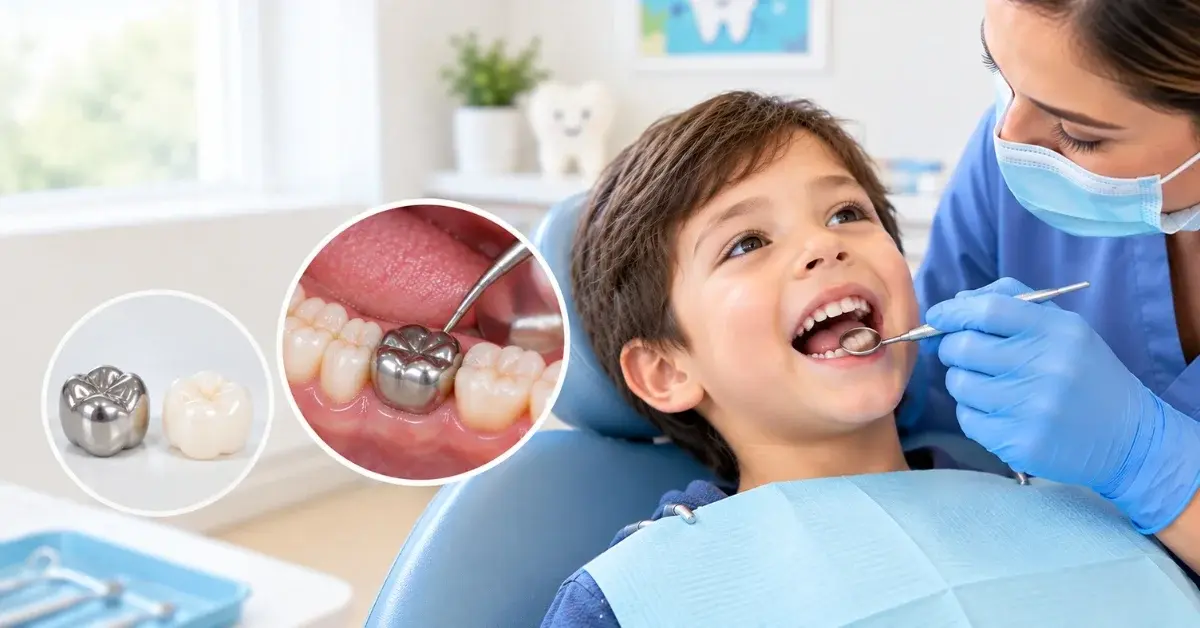
Stainless steel dental caps are silver-colored crowns that are commonly used for back teeth. They are strong, durable, and designed to handle the chewing pressure that baby molars experience every day. One of the biggest benefits of stainless steel dental caps is their strength. They can usually last until the baby tooth naturally falls out, as long as the crown stays secure and the tooth remains healthy underneath. They are also a practical option for children because they can protect the tooth without requiring as much customization as some tooth-colored options.
The main drawback is appearance. Since stainless steel crowns are silver, they are more noticeable when a child opens wide or laughs. For this reason, they are usually placed on back teeth that are less visible when a child smiles.
Pediatric White Crowns
Pediatric white crowns are tooth-colored crowns that are designed to blend in more naturally with a child’s smile. They may be recommended when appearance is a bigger concern, especially for front teeth or other visible areas. The biggest benefit of pediatric white crowns is their natural look. They can restore and protect a damaged tooth while helping the crown blend with the surrounding teeth. This can be especially helpful for children who need treatment on front teeth.
However, pediatric white crowns may not be the best choice for every tooth. Depending on the material, they may require more careful placement, may not be as durable for heavy chewing areas, or may be more likely to chip than stainless steel crowns. A pediatric dentist can explain whether a white crown is the best choice based on your child’s tooth, bite, age, and treatment needs.
What to Do If Your Child Needs Pediatric Crowns
The first step is to schedule an exam with a pediatric dentist. For families in Fairfax, VA, Pumpkin Pediatric Dentistry provides pediatric crown treatment for children who may need extra tooth protection. The dentist can check the tooth, take X-rays if needed, and explain whether a crown is the best option.
During the visit, you can ask questions about the type of crown being recommended, how long the appointment may take, and how to care for the crown afterward. At Pumpkin Pediatric Dentistry, the goal is to help parents feel informed and help children feel as comfortable as possible during care.
Pediatric Crowns in Fairfax, VA
If your child has a cracked, damaged, or severely decayed tooth, pediatric crowns can help protect their smile and prevent the problem from getting worse. Pumpkin Pediatric Dentistry provides guidance on stainless steel dental caps, pediatric white crowns, and other treatment options for children.
Schedule an appointment with Pumpkin Pediatric Dentistry in Fairfax, VA to explore pediatric crowns for your child.
Frequently Asked Questions
Yes, many children can return to school after getting a pediatric crown, depending on how they feel after the appointment. If your child received numbing or sedation, the dentist may recommend taking it easy for the rest of the day.
Yes, once the crown feels comfortable and any numbness wears off, your child should be able to eat normally. It may help to start with softer foods at first and avoid sticky or very hard foods that could loosen or damage the crown.
A pediatric crown is designed to stay in place until the baby tooth naturally falls out. Regular dental checkups help the dentist make sure the crown is still fitting and functioning properly.
When the baby tooth is ready to come out, the crown usually comes out with it. This is a normal part of your child’s dental development.
Yes, a pediatric crown can come loose or fall off, especially if a child chews sticky candy, hard foods, or if the tooth underneath changes. If this happens, contact your child’s dentist so they can determine whether the crown needs to be replaced.
A pediatric crown is placed on the visible part of the baby tooth and should not prevent the permanent tooth from developing underneath. The dentist will monitor your child’s growth and tooth development during routine visits.
Book an Appointment
Contact Us
Ph. 703-436-1010
Fax. 703-436-1022
Email: Info@pumpkinpediatricdentistry.com
Address
13135 Lee Jackson highway. Suite 110
Fairfax VA 22033
Office Time
Monday - Saturday: 8:30AM–5PM