- Home
- Meet Dr. Floyd
- Our Reviews
- Treatments
- Infant Dental Exam
- Custom Mouth Guards
- Custom Night Guards
- Dental Emergency
- Dental Sealants
- Fluoride Treatment
- Gentle Teeth Cleanings
- Digital X-Rays
- Limited Orthodontics
- Silver Diamine Fluoride
- Space Maintainers
- Special Needs Dentistry
- Thumb/Finger Habit Appliance
- Tooth Colored (White) Crowns
- Tooth Colored (White) Fillings
- Tooth Extractions
- Sedation Dentistry
- Frenectomy Laser Treatment
- Parents info
- Referrals
- Contact Us
White Crowns vs. Silver Crowns for Kids: Which Is Better?
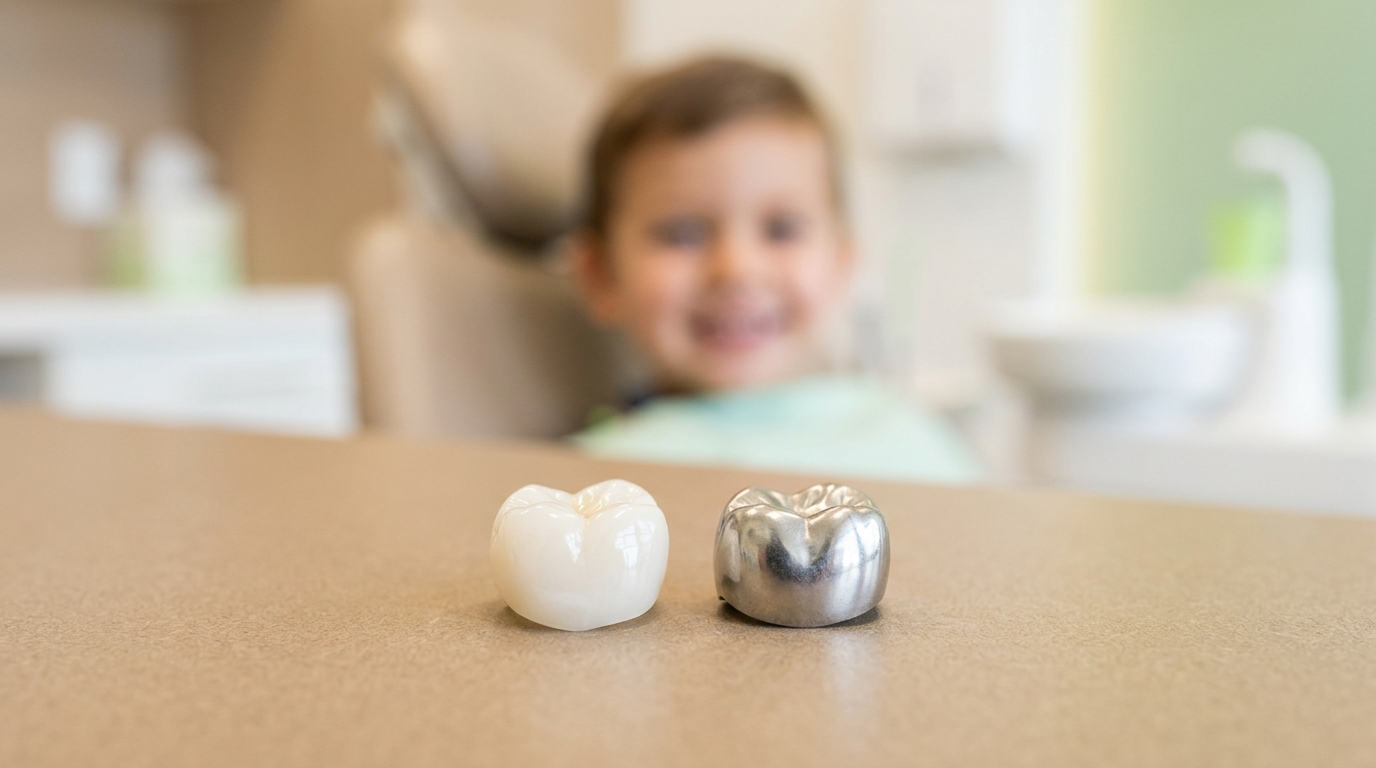
When your child needs a dental crown, one of the biggest decisions you may face is choosing between white and silver crowns. Both are commonly used in pediatric dentistry to restore damaged teeth, but they differ in appearance, materials, and durability. While silver crowns have been used for decades, white crowns have become a popular alternative for parents who want their child’s dental restorations to look more natural. Understanding the difference between white crowns versus silver crowns can help you make an informed decision about your child’s dental care. Let’s compare their advantages, disadvantages, and what makes each option suitable for different dental needs.
What Are White Crowns and Silver Crowns?
White and silver crowns are two types of pediatric dental crowns used to cover and protect damaged or weakened teeth. Although they serve a similar purpose, they are made from different materials.
White dental crowns, also known as zirconia crowns, are made from a strong, tooth-colored ceramic material. They are designed to resemble natural teeth and blend in with the surrounding smile. Zirconia crowns are available for both front and back teeth, making them an option for parents concerned about the appearance of dental restorations.
Silver dental caps, commonly called stainless steel crowns, are made from a metal alloy containing iron, chromium, and other metals. They have a distinctive silver appearance and are widely used to restore baby molars. Stainless steel crowns are known for their strength, flexibility, and ability to withstand everyday chewing.
What’s the Difference in White Crowns vs. Silver Crowns?
Both white and silver crowns are designed to protect damaged teeth, but their materials offer different benefits. When comparing white crowns and silver crowns, there are five important differences to consider.
1. Appearance
One of the biggest advantages of white crowns is their natural appearance. Zirconia crowns are available in tooth-colored shades that complement your child’s smile, making them a great option for both front and back teeth. Stainless steel crowns have a metallic silver finish. While a silver tooth crown may be less noticeable on a back molar, it can stand out when your child smiles, laughs, or opens their mouth.
For parents who want their child’s dental work to blend in with their natural teeth, white crowns offer a more discreet restoration.
2. Durability and Strength
White zirconia crowns are made from a strong ceramic material designed to withstand everyday biting and chewing. They are highly resistant to wear and can provide long-lasting protection for damaged baby teeth. Stainless steel crowns are also durable and have been used successfully in pediatric dentistry for decades. Unlike zirconia, stainless steel is flexible, allowing dentists to adjust the crown’s shape for a secure fit. While zirconia crowns are rigid and may fracture under excessive pressure, their strength makes them a reliable restorative option when properly selected and placed. Both materials can provide lasting protection until the baby tooth naturally falls out.
3. Tooth Preparation and Placement
White crowns and silver crowns require different preparation techniques because of their materials. Zirconia crowns come in predetermined shapes and sizes, so the dentist carefully prepares the tooth to create enough space for the restoration. Stainless steel crowns can be trimmed and reshaped, which generally allows them to be placed with less tooth reduction. Although white crowns typically require additional tooth preparation, they provide a durable, tooth-colored restoration that can protect the remaining tooth structure.
4. Cost and Insurance Coverage
White crowns generally cost more than stainless steel crowns because of their materials and placement requirements. However, many parents appreciate the opportunity to restore their child’s teeth without the noticeable appearance of metal. Dental insurance coverage varies by provider and plan. Some policies may cover pediatric crowns, while others may require parents to pay a portion or all of the treatment costs. Before choosing a treatment, ask your child’s dental provider about pricing, insurance benefits, and potential out-of-pocket expenses.
5. Gum Health and Oral Hygiene
Another advantage of white zirconia crowns is their smooth, polished surface, which makes it more difficult for plaque to accumulate. Research has found that zirconia crowns may be associated with less gum inflammation compared to pediatric stainless steel crowns. Both types of crowns still require consistent brushing, flossing, and regular dental checkups to maintain good oral health.
What Are the Best Dental Crowns for Kids?
There isn’t one type of dental crown that’s best for every child. Both white and silver crowns offer benefits, and the right choice depends on your child’s dental needs and preference.
When determining the best dental crowns for kids, pediatric dentists consider several factors:
- Tooth location: White crowns may be preferred for visible front teeth, while stainless steel crowns are commonly used for back molars.
- Condition of the tooth: The amount of healthy tooth structure remaining can influence whether a zirconia or silver tooth crown will fit securely.
- Biting and chewing habits: Children who grind their teeth or place excessive pressure on their restorations may require additional consideration when selecting a crown.
- Appearance preferences: Parents may prefer a tooth-colored option that blends with their child’s natural smile.
- Budget and insurance: Treatment costs and available coverage can affect which options are practical for a family.
White crowns can be an excellent choice for children who need strong dental restorations without the noticeable metallic appearance. However, silver dental caps remain a dependable option, particularly when preserving tooth structure and achieving a secure fit are priorities. Ultimately, the best choice should balance appearance, functionality, and your child’s long-term dental health. A pediatric dentist can examine the affected tooth, discuss the advantages of each material, and recommend an appropriate treatment.
Explore White Crowns at Pumpkin Pediatric Dentistry
Your child’s dental crown should do more than protect their tooth. It should also fit comfortably and support their growing smile. At Pumpkin Pediatric Dentistry in Fairfax, VA, we offer tooth-colored white crowns made from durable zirconia. These restorations are designed to protect damaged teeth while maintaining a natural-looking smile.
For families searching for white crowns in Fairfax, our board-certified pediatric dentist, Dr. Jazmin Floyd, can assist. Schedule a dental appointment today to learn whether white zirconia crowns are the right choice for your child’s smile!
FAQs About White Crowns vs. Silver Crowns
Yes. White crowns can be placed on baby molars as well as front teeth. However, not every molar is a suitable candidate. The amount of remaining tooth structure, available space, and your child’s bite can influence whether a white zirconia crown is recommended.
In some cases, a stainless steel crown can be replaced with a white zirconia crown. However, removing an existing crown may require additional treatment or removal of tooth structure. If the silver crown is functioning properly, replacement for appearance alone may not be advisable. Your pediatric dentist can determine whether changing the restoration is appropriate.
Zirconia crowns are highly resistant to staining and discoloration because of their smooth, nonporous surfaces. Unlike natural teeth, they do not absorb pigments easily. However, plaque and surface deposits can still accumulate, making regular brushing and professional cleanings important.
Stainless steel crowns are generally safe for children without metal sensitivities. However, many contain nickel, which can cause allergic reactions in some individuals. If your child has a known or suspected metal allergy, inform their pediatric dentist before treatment. Metal-free zirconia crowns may be a suitable alternative.
White crowns are designed to provide long-lasting protection and may remain in place until the baby tooth naturally falls out. Their lifespan depends on factors such as placement, chewing habits, oral hygiene, and the condition of the underlying tooth. Although zirconia is highly durable, crowns can occasionally chip, loosen, or require replacement.
Book an Appointment
Contact Us
Ph. 703-436-1010
Fax. 703-436-1022
Email: Info@pumpkinpediatricdentistry.com
Address
13135 Lee Jackson highway. Suite 110
Fairfax VA 22033
Office Time
Monday - Saturday: 8:30AM–5PM